The AI vs human logo design debate comes down to one question: do you need a quick picture, or a brand mark you can build a business on? AI logo makers are fast and easy, and they have their place. But a logo is more than an image.
This guide gives an honest comparison, including where AI is useful, so you can choose with clear eyes.
AI vs Human Logo Design: Quick Comparison
Factor
AI logo maker
Human designer
Speed
Minutes
Days, with a proper process
Originality
Often generic and similar to other results
Built around your business
Brand understanding
Reads keywords only
Asks about audience, goals and message
Files
Often images, sometimes limited formats
Vector files and full logo sets
Revisions
Re-run or tweak settings
Direct feedback and refinement
Ownership and trademark
Can be unclear
Clear terms, agreed in writing
Best for
Quick ideas and placeholders
A logo you will use for years
1. Speed and Convenience: AI Wins
It is fair to say it plainly: in any AI vs human logo design comparison, AI is faster. Logo makers rely on generative AI, which can turn a few words into dozens of images. You type a few words and get dozens of options in minutes, with no meetings or waiting. If you only need a rough idea or a temporary placeholder, that speed is useful.
The trade-off is that fast results are often shallow. A logo you will use on your website, packaging and signs for years deserves more than a quick output.
2. Originality: The Biggest Gap
AI tools learn from existing designs, so their results tend to look alike. Many businesses in the same industry end up with similar shapes, icons and layouts. That makes it harder to stand out and raises the chance of a close match with another brand. Use our guide to check if your logo is original before you commit to any design.
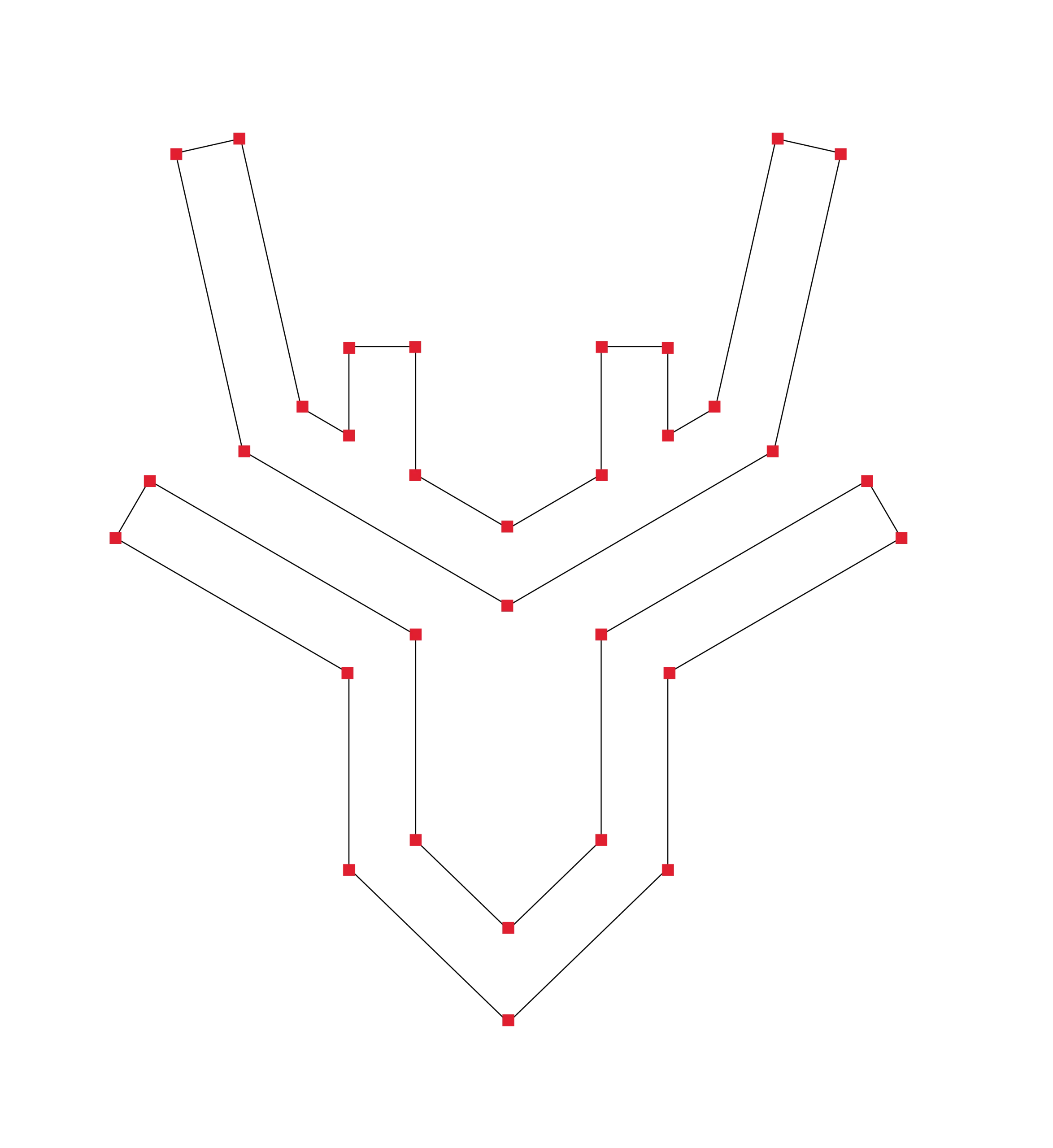
A human designer makes deliberate choices about every curve and angle. The Hunter logo construction below shows how a mark is built from planned points and lines, not generated at random.
Hunter: a mark built from planned points and lines.
3. Understanding Your Brand
This is where AI vs human logo design differs most. AI reads your keywords. It does not know who your customers are, what your competitors look like or what feeling your brand should create. A designer asks about your audience, your market and your goals, then turns those answers into shape, colour and type.
This is the difference between a logo that looks nice and a logo that does a job. Our guide to logo vs brand identity shows how the logo fits into the bigger picture.
4. File Quality and Flexibility
A logo must work everywhere: a favicon, a business card, a van, a billboard. That needs clean vector files and several versions, such as full colour, one colour, white and icon-only. Many AI tools export images only, and a low-resolution file can blur when it is enlarged. Read our guide on vector vs raster logos to see why this matters.
Open Box: a simple geometric mark that stays clear at any size.
5. Ownership and Trademark Questions
Ownership of AI-generated artwork and the ability to register it as a trademark can be uncertain, and the rules differ from country to country. A custom logo from a designer normally comes with clear terms agreed in writing.
This is general guidance, not legal advice. For trademark or copyright questions, speak to a qualified professional.
6. Feedback, Revisions and Accountability
Revisions show the AI vs human logo design gap clearly. With an AI tool, a change usually means generating again and hoping. With a designer, you can say “make it bolder” or “this feels too corporate” and get a thought-through answer. A person is also accountable for the result, which matters when your business depends on it.
7. When AI Can Still Help
AI is useful for brainstorming. You can use it to explore moods, colours or ideas before you brief a designer, and a placeholder is fine for a test project. Treat it as a sketchbook, not the final logo. Once a business is real, the logo should be too.
How to Choose Between AI vs Human Logo Design
Ask yourself three questions. Will this logo be on public materials for years? Do I need to stand apart from competitors? Do I need proper files and clear ownership? If the answer to any of these is yes, work with a human designer. If you are testing an idea and nothing is permanent, AI can be a starting point.
AI can produce images quickly, but it cannot match a designer’s understanding of your audience, market and goals. For a lasting brand mark, a human designer is still the safer choice.
Are AI-generated logos original?
Not always. AI learns from existing designs, so results can look similar to other logos. Always check originality before you use one.
Can I trademark an AI-generated logo?
This can be uncertain and depends on your country. Ask a trademark professional before you rely on one.
When is an AI logo maker fine to use?
For brainstorming, mood exploration or a temporary placeholder. For a permanent brand mark, a custom design is better.