Why Your Logo Needs to Work in Black and White (Not Just Color)
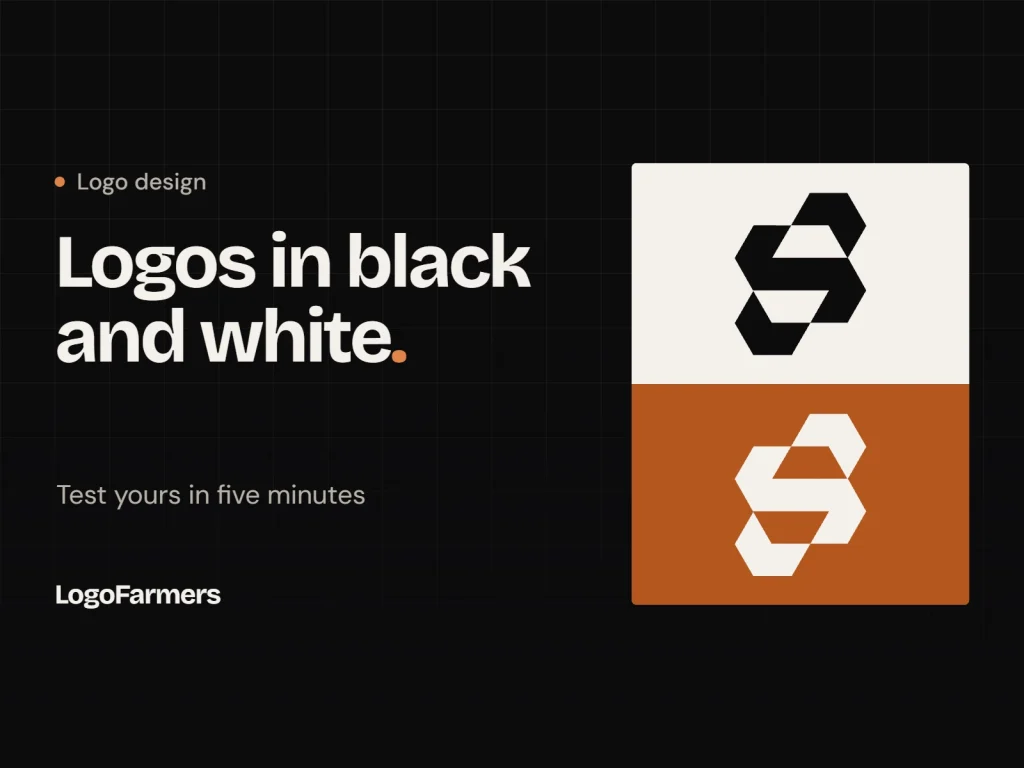
Colour gets the attention, but a logo has to survive without it. A black-and-white test shows whether the shape, proportion and spacing do the work. Start here, and add colour only after the mark passes.
Why black and white comes first
When you remove colour, you remove the easy fix. Weak shapes and crowded details become obvious. A logo that works in black and white is simpler, easier to reproduce, and more likely to hold up across print and digital.
Where a one-colour logo gets used
Newspapers, receipts and forms that print in black only
Engraving, stamping and embossing
Fax, photocopy and low-cost signage
Social profile images at very small sizes
How to run the black-and-white test
Step 1: Convert the logo to greyscale
Make a copy and remove all colour. Look at the shapes first. If the mark only reads because of colour contrast, the shape needs work.
Step 2: Check the contrast
Look at whether the main shapes separate from the background. Thin lines, light greys and fine textures often disappear in print.
Step 3: Shrink it
View the logo at 32 pixels or 1 inch wide. If the main idea is still clear, the structure is strong enough to build on.
Step 4: Add colour last
Once the one-colour version works, choose colours for mood and recognition. Keep the one-colour version as a fallback in your brand files.
Common fixes
Replace thin strokes with bolder ones
Remove gradients, which usually do not reproduce in one colour
Reduce the number of details
Make the negative space do part of the work
Checklist
Does the logo read in pure black on white?
Does it read in pure white on black?
Does it still work at small size?
Do you have a one-colour version in your files?
Need a logo that works everywhere? Tell us about your business and where the logo will live. Start a project
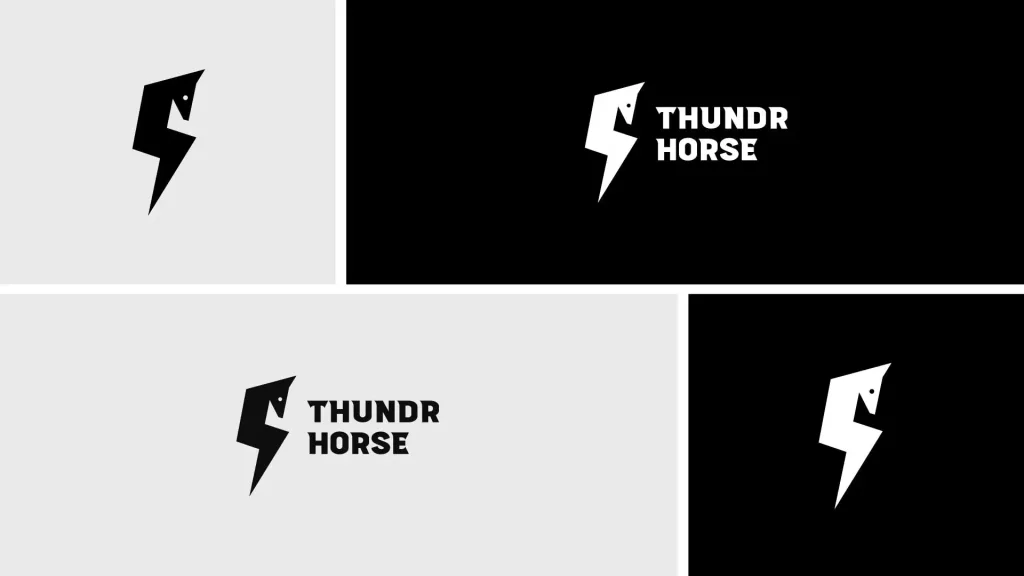
Thundr Horse: the icon and lockup work in solid black and in reversed white.
1. Many places can’t print colour. Invoices, receipts, shipping labels, fax and photocopies, newspaper ads, rubber stamps, laser engraving, embossing and foil all reproduce your logo in one colour. Often you don’t control how it’s printed.
2. One-colour production is cheaper. Screen printing, embroidery and promotional items are usually priced per colour. A logo that works in one colour costs less every time you make merch, packaging or signage.
3. It shows whether the design is actually good. Without colour, you only see shape, balance, contrast and spacing. That’s the real structure of the logo, and it’s what people remember.
4. It keeps the brand consistent. A logo that has a proper one-colour version looks like the same brand everywhere, instead of a muddy grey version someone made in a hurry.
5. It’s better for accessibility. People with colour vision deficiency, and anyone looking at a dim or low-contrast screen, rely on shape and contrast. A logo that reads in black and white reads for more people. You can check your colour contrast with the free WebAIM Contrast Checker.
Try this with your current logo. It takes five minutes:
Convert it to solid black. Not greyscale: pure black on white, no tints or gradients.
Reverse it. Make it pure white on a black background.
Shrink it. View both versions at 32px and at 2 cm wide.
Squint or blur it. Step back from the screen. Can you still recognise the main shape?
Print it on a basic office printer and look at it from across the room.
If the logo is still clear and recognisable in all five, you have a black and white logo that passes.
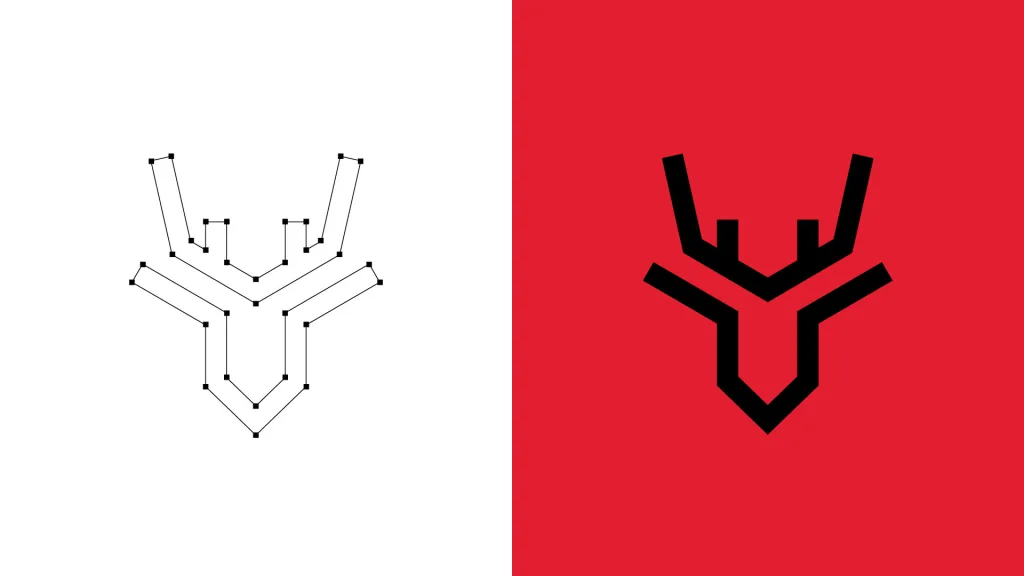
Hunter Properties: the mark is built as clean lines and finished as one solid colour, so it prints anywhere.
It depends on gradients. When the gradient goes, the shape goes flat or disappears.
Two colours do the work of one shape. If parts of the mark are only separated by colour (a light blue next to a dark blue), they merge into one blob in black.
Too much fine detail. Thin lines, small gaps and texture fill in when printed small or stitched.
Low contrast. Pastel colours that look soft on screen become a weak grey that barely shows.
Effects instead of form. Shadows, glows and 3D bevels can’t be printed in one colour at all.
Design in black first. We sketch and refine every logo in solid black before adding any colour. Colour comes last, once the shape works on its own.
Use space, not colour, to separate parts. A small gap between shapes keeps them distinct in any colour.
Simplify details so they survive small sizes, embroidery and low-quality print.
Build a proper one-colour version rather than a greyscale conversion. Sometimes it needs small adjustments, like an extra gap or a thicker stroke.
Make a reversed version for dark backgrounds. White-on-black often needs slightly thinner shapes, because white areas look bigger on dark backgrounds.
A complete logo kit includes at least these four colour versions:
Version
Use it for
Full colour
Website, social media, most digital and printed materials
These sit inside your wider logo system. Read how to create a logo system for the full set of versions, sizes and files.
Does every brand need a black and white logo?
Yes. Even colourful brands get printed in one colour sooner or later, on documents, packaging, stamps or merch. Having an approved version means it always looks right.
Is greyscale the same as black and white?
No. Greyscale keeps shades of grey, which often print as muddy tones. A true black and white version uses only solid black (or solid white), which is much clearer and cheaper to reproduce.
What if my logo uses a gradient?
Keep the gradient for digital use if you like it, but make sure there’s a flat, solid version of the same shape for everything else. If the shape only works with the gradient, the design needs simplifying.
Should I design my logo in colour or black and white first?
Black and white first. It forces you to get the shape right. Colour should support a strong form, not save a weak one.
At LogoFarmers, every logo is designed in black and white first, then tested at small sizes and in one colour before we add colour. You get full-colour, black and white logo and one-colour versions, ready for screen and print.